You’ve probably noticed PhonePe’s blue and purple logo everywhere – from your neighbourhood tea stall to high-end restaurants. Nearly half of all UPI transactions in India flow through this platform. Yet here’s what might surprise you: the company preparing for one of 2026’s biggest IPOs is still operating in losses.
Let me walk you through what the DRHP filing reveals – and more importantly, what it means for your investment decision.
The Big Picture: India’s Payment Leader Goes Public
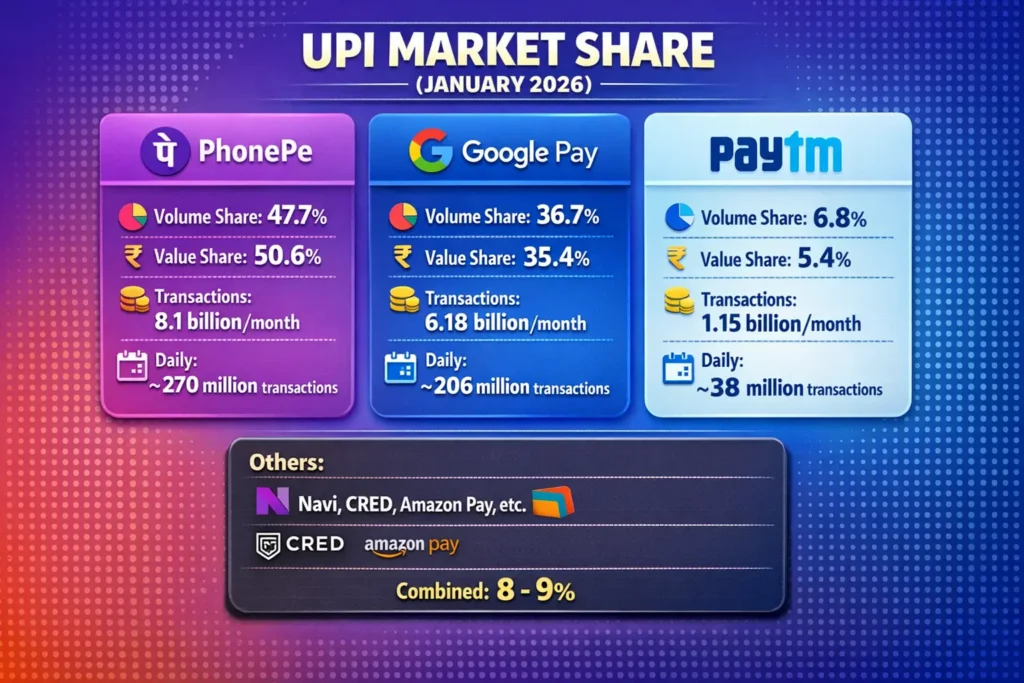
PhonePe has received SEBI approval for its Draft Red Herring Prospectus (DRHP), setting the stage for an April 2026 listing. This isn’t just another fintech IPO – we’re talking about a company that processes 980 crore transactions monthly and commands nearly 50% of India’s UPI market.
The expected issue size? ₹12,000-13,000 crore (approximately $1.5 billion), with the company seeking valuations exceeding $15 billion. That’s over ₹1 lakh crore in market capitalization, placing it firmly in large-cap territory from day one.
Here’s What Most People Miss…
Despite being the undisputed market leader for five consecutive years, PhonePe remains unprofitable. The EBITDA (Earnings Before Interest, Tax, Depreciation, and Amortization) shows losses, and the Profit After Tax (PAT) tells the same story.
This raises an uncomfortable question: Should SEBI approve IPOs for companies that haven’t demonstrated consistent profitability?
PULLOUT QUOTE: “Companies often operate at losses initially to capture market share through attractive offers. The real test comes when those offers stop – can they retain customers while turning profitable?” – Market Analyst Perspective
Breaking Down the Price Band
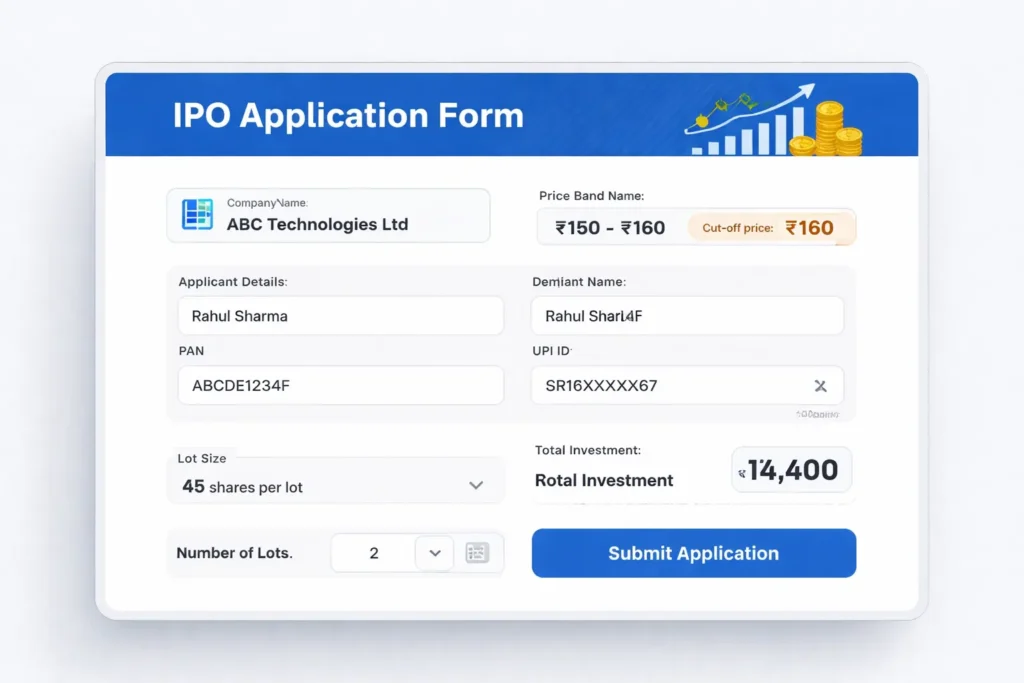
Based on the DRHP filing and issue size, the expected price band sits between ₹2,300 to ₹2,500 per share with a face value of ₹1.
Here’s the math: With approximately 5 crore shares being offered and an issue size of ₹12,000-13,000 crore, the pricing aligns with these valuations. However, the final price band will be announced closer to the issue opening date.
The Surprising Part?
This pricing puts PhonePe at premium valuations compared to established fintech players – despite the loss-making status. The company is banking on its market dominance and growth trajectory to justify these numbers.
But here’s why this matters to you as an investor: premium pricing with negative profitability creates a narrower margin of safety. You’re essentially betting on future turnaround rather than present performance.
PhonePe’s Business Model Decoded
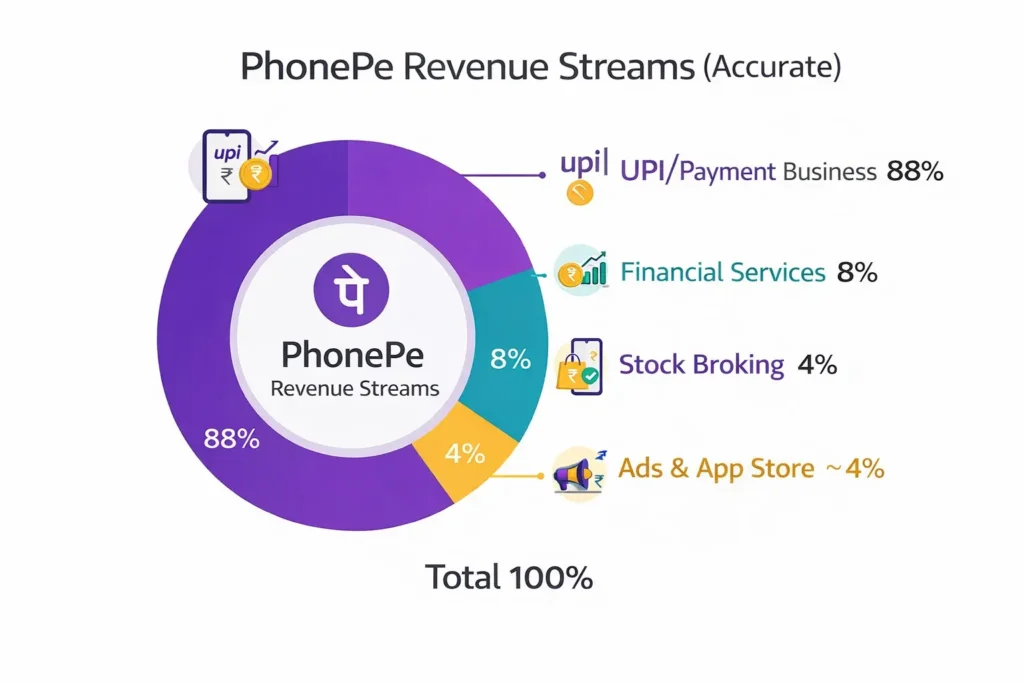
Understanding where the money comes from helps assess IPO viability. Here’s PhonePe’s revenue distribution:
- UPI Transactions (88% of revenue): The core business. Every time you scan a QR code or send money via PhonePe, the company earns interchange fees and merchant commissions. With 46.85% transaction volume share and 49.15% transaction value share, this segment dominates revenue.
- Financial Services (8% of revenue): Insurance distribution, mutual fund investments, and other financial products generate commission-based income. This segment shows promising growth potential as India’s insurance penetration remains low.
- Stock Broking (4% of revenue): PhonePe’s entry into equity trading competes with established players like Zerodha and Groww. The segment is nascent but strategically important for ecosystem expansion.
- Advertisement & App Store (4% of revenue): The PhonePe app store and in-app advertisements create additional revenue streams, though currently minimal contributors.
The question investors should ask: Is 88% dependence on one revenue source sustainable long-term?
Here’s the Reality Check
The government has imposed a 30% market share cap on UPI platforms. PhonePe currently holds nearly 50% and has received temporary exemption. Once this regulation kicks in, the company must reduce its market share – potentially impacting its primary revenue source.
PULLOUT QUOTE: “Diversification into financial services and stock broking isn’t just growth strategy – it’s survival insurance against UPI market share caps.” – Fintech Industry Observer
The Loss-Making Conundrum
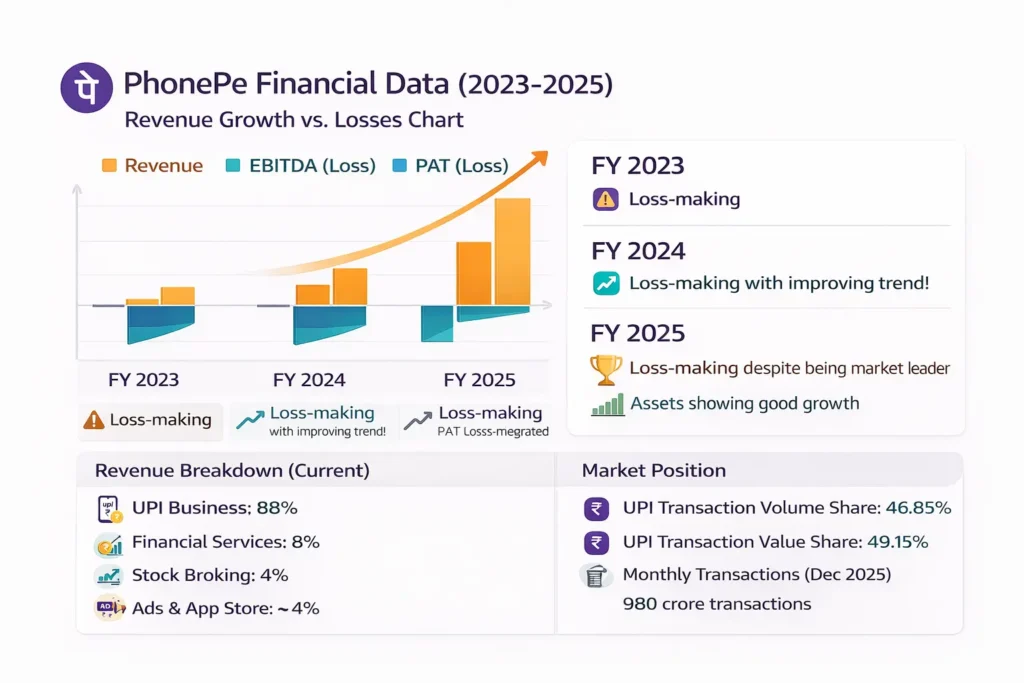
Let’s address the elephant in the room. PhonePe has operated at losses from 2023 through 2025. While revenue shows healthy growth, profitability remains elusive.
Why does this happen?
- Customer Acquisition Costs: Remember those ₹50, ₹100, even ₹700 cashback offers you received for making UPI payments? That’s money directly subtracted from the bottom line. These rewards work wonderfully for user acquisition but murder profitability.
- Infrastructure Investment: Building and maintaining payment infrastructure at PhonePe’s scale requires massive capital expenditure. Server costs, security systems, and technology upgrades don’t come cheap.
- Competitive Pressure: With Google Pay holding 36% market share and Paytm at 6-8%, intense competition forces companies to prioritize growth over profits.
But here’s what should concern you: After five years of market leadership, the path to profitability should be clearer. The IPO proceeds will help, but they also represent investors’ money being used to subsidize operations.
We’ve All Been There…
As retail investors, we’ve seen this pattern before. Companies lose money acquiring customers through attractive offers, then plan IPOs to raise capital, essentially transferring the burden from early investors to public market participants.
The critical question: When does PhonePe expect to turn profitable, and what’s the roadmap?
Comparing with Competitors
The comparison with LG India’s recent IPO offers perspective. LG, despite being a foreign company like PhonePe (backed primarily by Walmart), came to market with:
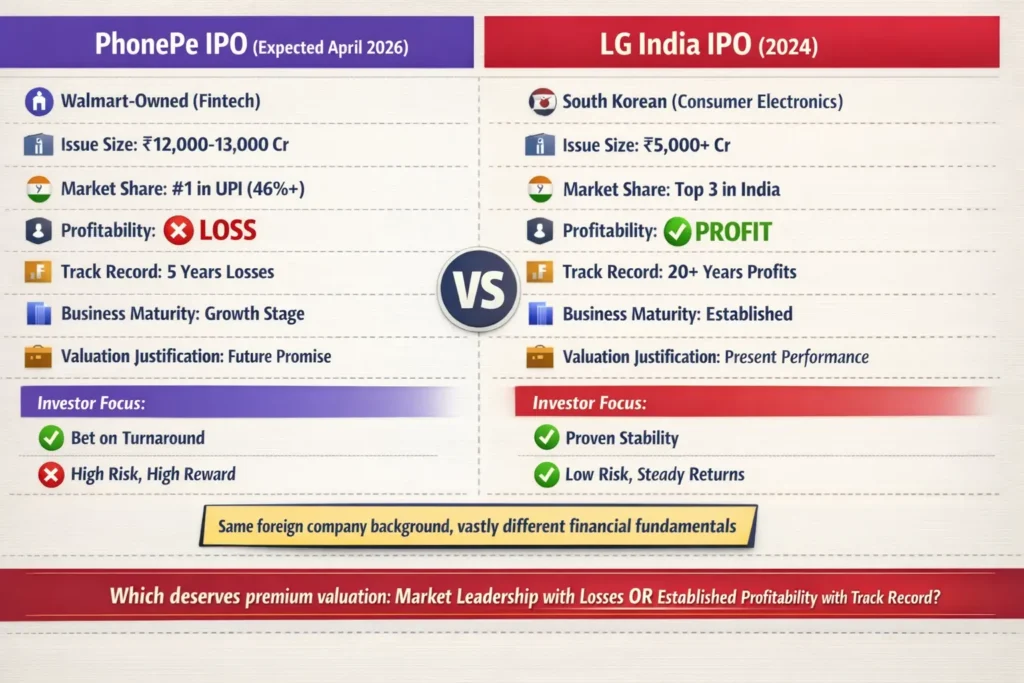
Which deserves better valuation multiples? The market will decide, but the contrast is stark.
What This Means for Your Portfolio
If you’re considering PhonePe IPO allocation, here’s the balanced perspective:
The Bull Case:
- Undisputed market leader with 50% UPI market share
- Strong brand recall and user base
- Diversification into high-margin financial services
- Digital payments sector growth aligns with India’s cashless economy push
- Backed by Walmart, providing financial stability
The Bear Case:
- Persistent losses despite market dominance
- Regulatory risk from 30% market share cap
- Heavy dependence on single revenue stream (UPI)
- Premium valuations without profitability to justify
- Uncertain timeline for achieving sustainable profits
Here’s Why This Matters
Large-cap companies typically offer stability rather than explosive growth. With PhonePe entering markets at ₹1 lakh crore+ valuation, expecting double or triple returns becomes unrealistic. You’re looking at moderate, steady growth – if profitability materializes.
The risk-reward equation tilts unfavorably when you’re paying premium prices for future promises rather than present performance.
The Regulatory Angle
SEBI’s approval raises broader questions about market integrity. Should companies operating in continuous losses receive listing permission?
From one perspective, growth-stage companies need patient capital, and public markets can provide that. Amazon and other tech giants operated at losses for years before dominating their sectors.
From another perspective, retail investors deserve protection from being funding sources for unproven business models. A mandatory two-year profitability track record before IPO approval could filter out genuinely sustainable businesses from those riding valuation hype.
What do you think? Should SEBI mandate profitability before allowing IPOs, or does that stifle innovation and growth?
Timeline and Next Steps
Based on market sources and company planning:
- Expected Issue Date: April 2026 (next financial year)
- Current Status: DRHP approved by SEBI
- Next Milestone: Final price band announcement (typically 2-3 weeks before issue opening)
- Listing Timeline: Within 6 working days of issue closing
The April 2026 timeline means the company has several months to potentially demonstrate improved financials. Watch for quarterly results leading up to the IPO – any movement toward profitability could significantly impact investor sentiment.
The Final Verdict
PhonePe represents a fascinating case study in modern IPO dynamics. You have market leadership, brand strength, and growth potential on one side – losses, regulatory risks, and premium valuations on the other.
- For conservative investors: The loss-making status should trigger caution. Wait for at least 2-3 quarters of consistent profitability before considering investment.
- For growth-oriented investors: If you believe in India’s digital payment revolution and PhonePe’s ability to monetize its massive user base, the IPO presents an entry point – but be prepared for volatility.
- For IPO flippers: Large-cap IPOs typically generate lower listing gains than mid-cap or small-cap issues. Don’t expect Zomato or Nykaa-type listing pops.
The Bottom Line
PhonePe isn’t necessarily a bad company – it’s potentially an overpriced opportunity. At ₹2,300-2,500 per share with ₹1 lakh crore+ valuations, you’re paying for perfection in execution and market conditions.
Remember: The best investments happen when quality companies trade at reasonable prices, not when market-leading companies command premium valuations despite fundamental concerns.
What’s your take on the PhonePe IPO? Does market dominance justify loss-making operations, or should profitability come first? The comment section awaits your perspective.
Information Source
- SEBI Website: www.sebi.gov.in → Public Issues → Search “PhonePe”
- BSE India: www.bseindia.com → Corporates → Public Issues
- NSE India: www.nseindia.com → Corporates → IPO
- Company Website: Check PhonePe investor relations section
- Youtube Channel – Knowledge Jazz
Disclaimer: This analysis is for informational purposes only and should not be considered investment advice. Please consult with a certified financial advisor before making investment decisions.

Written by
Mayank Srivastava
AI Content Writer, Finance Niche Writer & Gaming Tech Specialist
A tech content writer holding Master degree in Information Technology with 6+ years of experience covering Finance Niche,Tech Writing, and AI Content Writing Expert, Explore AI tools and writing use case. Tested hundreds of controllers across PlayStation, Xbox, and PC — writes only what can be verified. No fluff, no filler.